
For many international students and newly arrived Vietnamese immigrants, not being able to drive means facing major limitations in daily transportation. However, the driver’s license process in the United States can feel complicated, which makes many people hesitate and feel unsure about where to begin.
In this article, I will walk you through the process step by step so you can confidently begin your journey toward getting a driver’s license.
Learner’s Permit
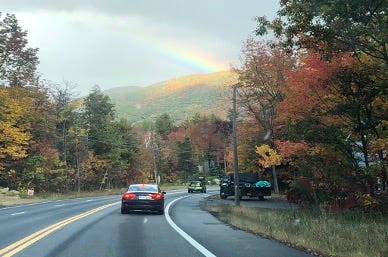
First, you must be at least 15 or 16 years old, depending on the rules of the state where you live. You must apply for a learner’s permit, which may be available online, through the Department of Motor Vehicles (DMV) or the equivalent agency in your area.
When applying, you will need to provide documents that prove your identity and residency, and you will also need to pay a fee. These documents may include a birth certificate (if you have a notarized English translation), a passport with a visa, a green card, utility bills such as electricity, water, or phone bills, a Social Security card or number, a W-2 form, bank statements, and more. If you are a student, you may also need to provide Form I-20.
To receive a learner’s permit, you must pass a written knowledge test on traffic laws and road signs. You can usually find study materials for this test in the Driver’s Manual published on your state DMV website. Some states, such as New York, allow you to take the written test in Vietnamese. Official state requirements vary, so it is important to check your local DMV website for the most accurate and current information.
In some cases, you may be able to complete the written test online and then visit a DMV office to take a photo, complete a vision test, and finish the remaining application steps.
5-Hour Pre-Licensing Course
After getting your learner’s permit, some states require new drivers to complete a 5-hour pre-licensing course. This course may be offered online or in person. In New York, official DMV guidance says new drivers must complete this requirement before taking a road test unless they complete an approved driver education program instead. Depending on the provider and the state, proof of completion may be sent directly to the DMV.
Practice Driving
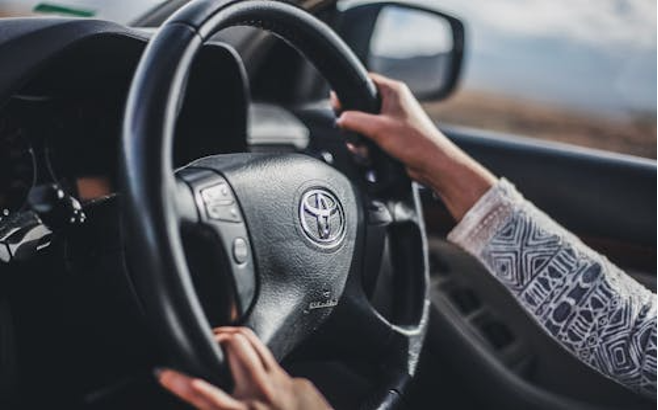
Practicing your first few hours with a professional driving instructor and a training vehicle can help reduce anxiety and teach you the essential skills you need to pass the driving test.
After completing lessons with an instructor, you should spend an additional 30 to 50 hours practicing under the supervision of someone who is at least 21 years old and already has a valid driver’s license. While practicing, make sure you pay attention to any restrictions on when and where permit holders are allowed to drive, especially in large cities.
For international students and newcomers, practice driving can sometimes be one of the biggest challenges, mainly because it is not always easy to find someone who can help supervise you.
Some of my friends have posted in student Facebook groups or local Vietnamese community pages to look for someone who could help them practice driving. This approach can make it easier to stay consistent and independent instead of relying only on friends or relatives. However, you should be careful to avoid scams or situations that may raise safety concerns.
If you practice consistently for 5 to 6 hours each week, such as 1 or 2 hours on weekdays and 4 hours on weekends, you may be ready for the test in about 5 to 10 weeks.
When practicing, in addition to learning how to control the vehicle and read road signs, you should also become comfortable with key test skills such as stopping smoothly at red lights, parallel parking, and doing a 3-point turn, also known as a K-turn.
Road Test
You can usually schedule your road test online through your state DMV website. During the test, you must demonstrate that you can operate a vehicle safely on public roads.
If you pass the road test, you may receive a temporary certificate that allows you to drive while waiting for your official license. Your full driver’s license is usually mailed to the address you registered, often within about 1 to 2 weeks.
If you are under 18 when you receive your license, you may be issued a provisional license. During that period, you must follow additional rules such as curfews and limits on how many passengers you may carry.
For drivers under 18, getting a full unrestricted license often requires holding the provisional license for a certain period of time and meeting the state’s age requirements, which are commonly 18 or older.
Special Notes
Transferring a Driver’s License from Another State
If you already have a valid driver’s license issued by another state, you can often transfer it by providing the required documents and passing a vision test. If you have an International Driving Permit (IDP), you may be allowed to drive for a limited period before applying for a U.S. driver’s license, depending on state rules.
REAL ID Driver’s License
Some states issue driver’s licenses that meet REAL ID standards. Applying for this type of license usually requires additional supporting documents. One advantage of a REAL ID-compliant license is that it can also be used as identification for domestic flights.
Estimated Costs of Getting a Driver’s License
· DMV fees (permit, 5-hour pre-licensing course, license): about $150–$200+
· Driving school lessons (for 5 hours): about $200 to $800
· Car rental for the road test: about $100 to $300
· Additional costs for self-practice driving
Mistakes to Avoid
· Driving over the speed limit, especially in crowded downtown areas
· Failing to slow down and watch carefully at pedestrian crossings
· Not checking mirrors when changing lanes
· Not turning your body to look behind you while parallel parking
· Braking too suddenly at a red light
· Failing to observe carefully when crossing an intersection
Summary of the Steps to Get a Driver’s License
· Get a learner’s permit by passing the written test
· Practice driving
· Complete the 5-hour pre-licensing course (if required)
· Take the road test
Please note that each state has its own procedures and requirements for getting a driver’s license, so you should always check the official DMV website for the state where you live.
References
DMV.org: Provides guides and general information about motor vehicle agencies and licensing requirements in each state.
USA.gov: Official information source for state motor vehicle services in the United States.