
English is not only an initial barrier for many immigrants in the United States; limited English proficiency can also have a long-term impact on their lives and their ability to integrate into their communities. English skills can affect employment opportunities, access to services, educational opportunities, and participation in community life.
To help adults improve their language skills, continue their education, and enter or advance in the workforce, federal, state, and local governments, along with community colleges and nonprofit organizations, support a wide range of education and training programs.
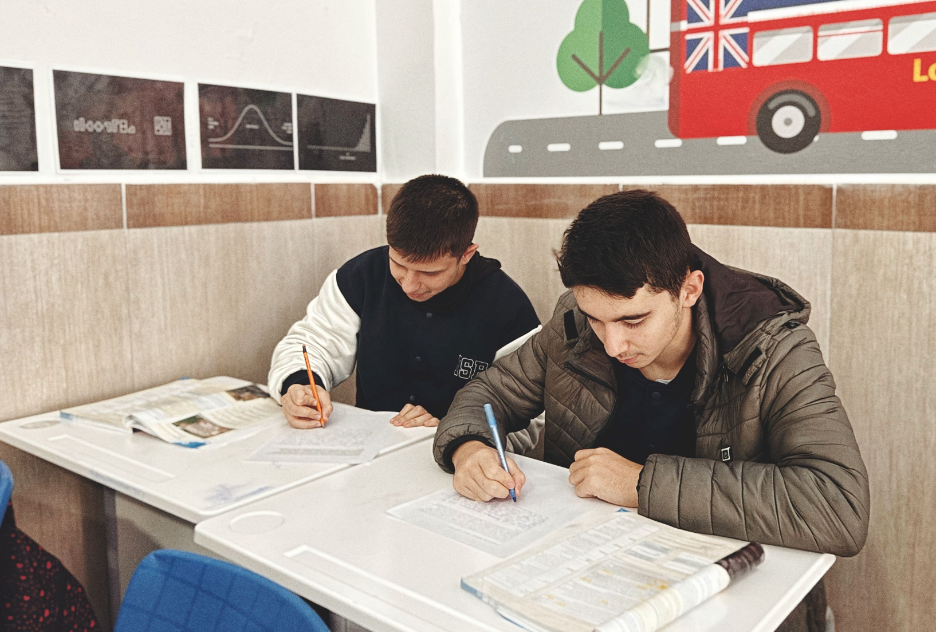
Image: This and No Internet 25
Many of these programs are available free of charge or at a low cost, depending on the program, its funding source, and the learner’s eligibility.
Common Types of Support Programs
Programs may include:
- English classes for adults, often referred to as English as a Second Language (ESL) or English Language Acquisition (ELA);
- basic reading, writing, and math instruction;
- high school equivalency preparation;
- programs that help learners prepare for the U.S. naturalization process;
- career training combined with English-language instruction;
- skills development and career transition programs;
- and other educational services for adult learners.
English Classes for Adults (Adult ESL)
Adult ESL is one of the most widely available educational resources for immigrants and other adult English learners. Classes are often offered at different proficiency levels, ranging from beginner courses to classes for learners who already have stronger English skills.
Course content varies by program and may include everyday communication, reading and writing, grammar, pronunciation, workplace English, and other language skills needed for daily life in the United States.
Many providers also offer evening or weekend classes to accommodate learners who work or have family and caregiving responsibilities.
Programs That Help Learners Prepare for Naturalization
Many immigrant-serving agencies, libraries, schools, and community organizations offer classes to help immigrants prepare for the U.S. naturalization process.
Topics may include:
- English skills needed for the naturalization process;
- U.S. history and government;
- civics;
- test preparation;
- and naturalization interview practice.
It is important to remember that participating in a naturalization preparation class does not necessarily mean that a person is eligible to apply for U.S. citizenship. Eligibility depends on the individual’s immigration status, history, and other circumstances.
High School Equivalency Programs
High school equivalency programs are an important part of the adult education system. They may be particularly helpful for people who did not complete high school or who need a high school equivalency credential to continue their education or pursue better employment opportunities in the United States.
Adult Education programs may help learners:
- improve their reading, writing, and math skills;
- prepare for a state-recognized high school equivalency exam or program;
- prepare for career or vocational training;
- or meet certain requirements for continuing their education at a community college.
The GED is one of the best-known high school equivalency tests, although the tests and pathways available vary by state.
Career Training Combined with English-Language Instruction
This approach can be especially helpful for people who want to enter or return to the workforce more quickly. Instead of studying English for an extended period before beginning career training, learners can improve their English while developing job-related skills.
Depending on the location and training provider, programs may be available in fields such as:
- healthcare;
- manufacturing;
- construction;
- information technology;
- logistics;
- customer service;
- hospitality and food service;
- and other career fields.
Some programs use models such as Integrated English Literacy and Civics Education (IELCE) together with Integrated Education and Training (IET). These approaches are designed to help learners develop English proficiency, civic knowledge, and skills for further education or employment at the same time.
Who Can Participate?
Eligibility requirements vary by program and location.
Federally supported adult education programs generally serve eligible adults who need to improve basic skills, have not completed secondary education or its equivalent, or need to improve their English-language skills. Age requirements and other eligibility conditions may vary depending on the program and state regulations.
For this reason, if you are interested in a particular program, it is best to check directly with the provider rather than assume that all programs have the same eligibility requirements.
Do Immigrants Need to Be U.S. Citizens?
Not all English-language and adult education programs require participants to be U.S. citizens.
However, eligibility requirements may vary depending on:
- the type of program;
- the funding source;
- state or local regulations;
- the learner’s age and, where applicable, immigration or other eligibility status;;
- and the policies of the organization providing the program.
Some career training, financial assistance, or employment support programs may have requirements that differ from those of a standard ESL class. If you are unsure whether you qualify, contact the program provider directly for guidance.
Are These Programs Free?
It depends on the specific program.
Many adult education programs receive public funding and may be available free of charge or at a low cost to eligible learners. Public libraries, community organizations, nonprofit organizations, and educational institutions may also offer free or low-cost English classes.
However, not every adult education, ESL, or career training program is free. Some programs may charge tuition or fees for materials, exams, credentials, or vocational training.
How Can You Find the Right Program?
A good place to start is within your local community. Some states and local governments have offices or programs specifically designed to assist immigrants and newcomers to the United States. These may be called an Office of New Americans or have a similar name.
You can also look for programs through:
- community colleges;
- Adult Education Centers or Adult Learning Centers;
- American Job Centers;
- public libraries;
- state or local education agencies;
- nonprofit organizations serving immigrants;
- community and faith-based organizations;
- or refugee support agencies and organizations, if relevant to your situation.
When searching online, try terms such as “free ESL classes,” “adult education,” “English classes for adults,” or “high school equivalency classes,” along with the name of your city or ZIP code.
Key Takeaways
- The United States offers a wide range of English-language and adult education programs, many of which can be valuable resources for immigrants.
- Some programs receive government or nonprofit funding and may be available free of charge or at a low cost.
- In addition to English classes, learners may find programs that provide naturalization preparation, High School Equivalency preparation, career training, or job skills development.
- Eligibility requirements, costs, and available services can vary significantly by state, location, and program.
- Community colleges, adult education centers, American Job Centers, public libraries, and community organizations are good places to begin looking for a program that fits your needs.