When exploring higher education options in the United States, many students find themselves deciding between two common paths: community college and university.
Many people in my country believe that a university degree naturally leads to better career opportunities and higher income than a college-level qualification. That may be partly true in the Vietnamese job market.
But in the United States, the community college system is far more diverse and flexible. Transfer pathways, vocational programs, and other academic routes are designed to help students reach their goals in ways that are both practical and cost-effective.
In this article, we will compare the advantages and disadvantages of the educational paths international students most often consider.
Community College
Community colleges are two-year institutions, or sometimes shorter programs, that focus on foundational education and career preparation. The main credential awarded is the Associate Degree.
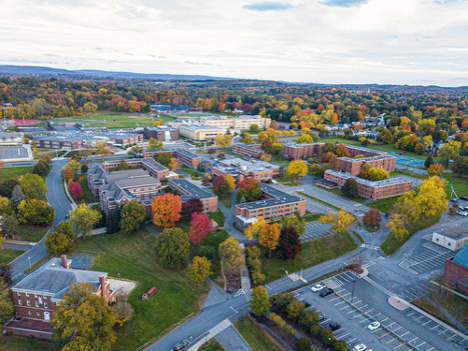
A common path at community college: the 2+2 transfer route
In this model, students complete two years of general education courses or major prerequisites at a community college, then transfer to a four-year university to complete a bachelor’s degree.
Many community colleges have transfer agreements with public and private universities. These agreements make it easier for students to transfer credits and continue their education smoothly. In the end, the degree you receive is still the bachelor’s degree awarded by the university where you complete your undergraduate studies.
Advantages of community college
Community colleges usually cost much less than universities when you consider tuition, books, and living expenses. Class sizes are often smaller too, which can be especially helpful for students who are still adjusting to academic life in the U.S.
Another major advantage is flexibility. Students can complete two years and transfer to a university later. In some cases, this path may even make it easier to enter a stronger university than applying directly from high school. The academic workload can also feel more manageable, making the transition to college life in the U.S. a little easier for some students.
Disadvantages of community college
At the same time, community colleges usually offer fewer majors than universities. Some jobs require a four-year bachelor’s degree, so students who stop after an associate degree may face more limited career options. In addition, alumni networks, internship opportunities, and campus resources are often not as extensive as those at universities.
University
Universities are institutions that offer four-year bachelor’s degrees as well as graduate degrees such as master’s and PhDs.
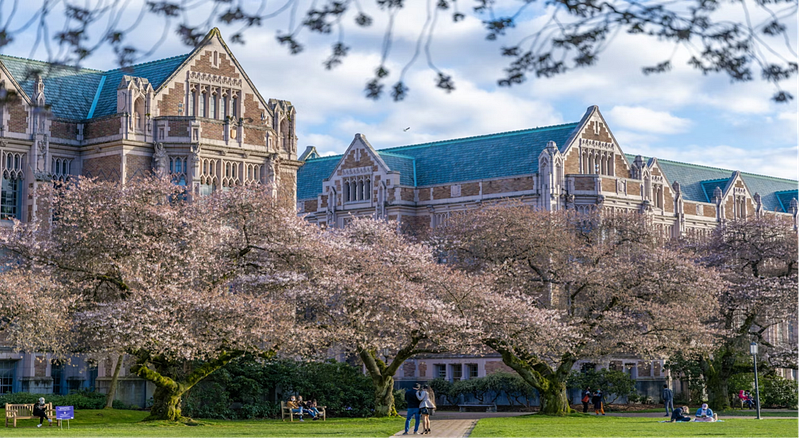
Advantages of university
University degrees are widely recognized and can be especially helpful for job applications and post-graduation visa opportunities. Universities also tend to offer broader academic choices, more research opportunities, more internships, and stronger alumni networks that can support your career over time.
In many cases, universities also provide stronger facilities and more specialized programs, making them a better fit for students who already know what they want to study and feel ready for a more demanding academic environment.
Disadvantages of university
The biggest downside is cost. Universities — especially top-ranked schools and private institutions — can be very expensive. The academic environment is often more competitive, classes may be larger, and students are generally expected to be highly independent from the beginning.
For some international students, especially those who have just arrived in the U.S., adapting to university life can take more time and effort than expected.
When should international students choose community college?
Community college may be the better choice if you want to reduce costs, if you are not yet fully confident in your English skills or academic preparation, or if you want to experience the U.S. education system before entering a university directly.
Many international students begin at a community college to save money and adjust to life in the U.S., then transfer to a university later to complete a bachelor’s degree. It is one of the most practical and cost-effective paths available, especially for students who are new to the country.
When should you choose a university?
You may want to choose a university directly if you already have a strong academic background, solid English skills, and a clear interest in a more specialized field. A university may also be the better path if your long-term goal is to work in the U.S. or improve your chances of receiving H-1B visa sponsorship later.
Conclusion
If you are new to the U.S. and want a more affordable starting point, beginning at a community college and then transferring to a university can be a smart and safe choice.
If you already feel ready in terms of English, finances, and academic preparation, going straight to a university may help you save time and access internships and career opportunities earlier in your academic journey.
As I always say, there is no single path that is best for everyone. What matters most is not where you begin, but how well you plan your journey and how consistently you follow through. In the long run, those are the things that shape your success.