
Buying a home is a major milestone for many people living and working in the United States. However, given the complex financial and legal systems involved, the journey to homeownership is far from simple.
In the days leading up to the closing of our first home purchase in the US, my husband and I were nearly exhausted from moving and handling a mountain of paperwork. The night before the closing, we finally opened the thick stack of documents — complacently assuming that since the law firm handled this all the time, there wouldn’t be any errors.
Yet, after just one evening of reviewing the files, we discovered nearly $10,000 in unnecessary fees and services, along with several calculation errors regarding the transaction costs.
This experience taught me that the home-buying process in the United States is complex not only in terms of financial preparation; every step presents its own challenges, requiring careful research before making any decisions.
In this article, I will share the knowledge and insights I gained from buying my first home to help make the process of owning your dream home go more smoothly.
Assessing Your Financial Situation
When planning to buy a home, you need to check your credit score and improve it if necessary. While many buyers aim for a score of 700 or higher to secure better interest rates, there are loan programs that accept lower scores depending on the circumstances. If you and your spouse are co-owning the home, the bank will evaluate both of your credit scores.
You need to ensure you have enough funds for the down payment (typically 20% of the home’s value) and closing costs (approximately 2% to 5% of the total loan amount). If your down payment is less than 20% or your credit score does not meet standard bank approval requirements, you might consider a home loan program backed by the Federal Housing Administration (FHA).
FHA-backed programs typically require a credit score of 580 or higher and a down payment of just 3.5% of the home’s value. However, borrowers are required to pay a Mortgage Insurance Premium (MIP).
Beyond the down payment, you must also assess your and your family’s current and future income. It is generally recommended that housing costs (including mortgage principal and interest, property taxes, insurance, HOA fees, etc.) do not exceed 28% of your pre-tax income, while total monthly debt obligations (mortgage, student loans, auto loans, etc.) should remain below 36% of your pre-tax income.
In practice, however, many current home loan programs may accept a higher Debt-to-Income (DTI) ratio, depending on factors such as your credit score, income, occupation, and the specific loan type you choose.
Each bank has its own lending policies and criteria for calculating interest rates. Therefore, it is advisable to shop around and compare rates and loan terms from various financial institutions and banks.
Finally, to ensure a smooth and speedy loan process, you should have the necessary documents ready — such as tax returns, employment history, pay stubs, bank statements, and proof of a co-sponsor if applicable.
Obtaining a Pre-approval Letter
Securing a pre-approval letter from a bank signals to the seller that you are a serious buyer and can significantly facilitate the home-buying process.
Why is this important? Finding a home that is both high-quality and suits your preferences is actually no simple task. Properties that offer good value tend to sell very quickly — sometimes within just a day or two.
When a home is listed for sale, the seller may receive multiple offers simultaneously and must weigh them to select the best one. From the seller’s perspective, the “best” offer isn’t necessarily the highest price; it also depends on the buyer’s ability to secure guaranteed bank financing by the closing date.
Payment issues arising near the closing date can cost sellers tens of thousands of dollars — forcing them to relist the property, disrupt moving plans, impact their employment, and even jeopardize the purchase of their next home.
Therefore, having a pre-approval letter from a bank ready to go gives your offer a significant competitive advantage in the eyes of the homeowner.
Defining your key criteria for the home
Location — Determine the area where you want to live — such as proximity to work, family members, or a specific school district if you have young children or plan to start a family.
Housing type — Choose between a single-family home, townhouse, condo, etc.
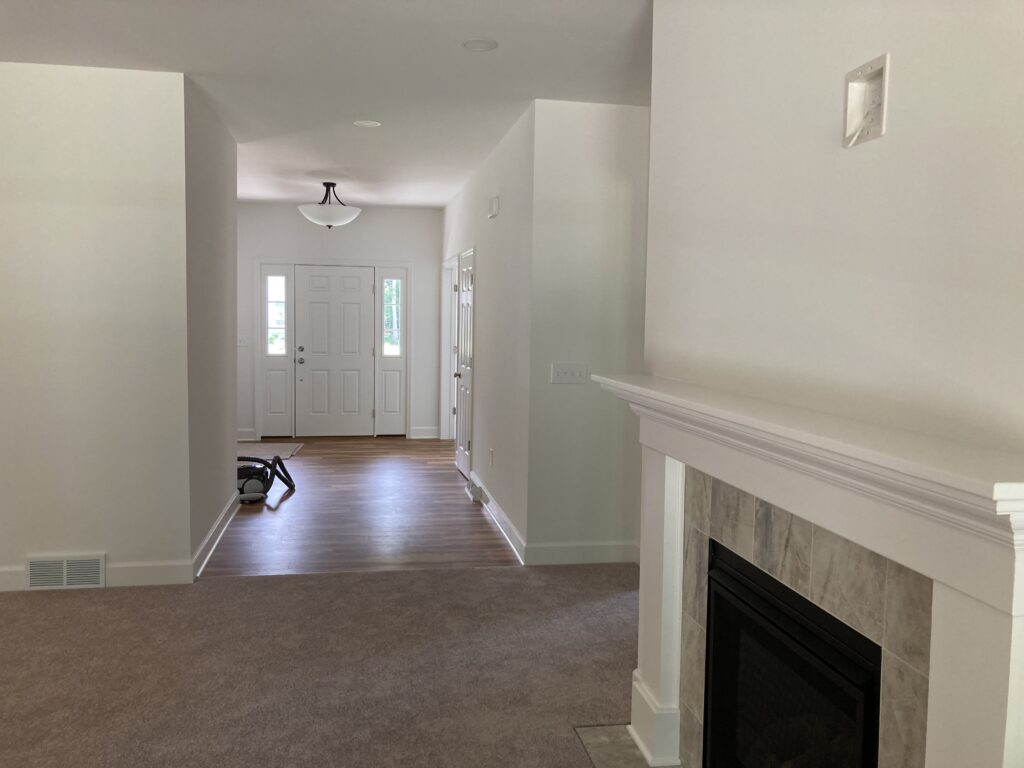
Annual costs — Property taxes, school taxes, homeowners insurance, maintenance/repair costs, and Homeowners Association (HOA) fees (applicable to townhouses).
Define your must-have criteria — List your essential requirements, such as the size of the house (note that the square footage listed often excludes basements, garages, front and back yards, etc.), the number of bedrooms and bathrooms, yard size, parking/garage space, and so on.
Finding a Real Estate Agent
An experienced buyer’s agent will guide you through the entire process, help you understand local market conditions, and identify properties that meet your needs.
A knowledgeable and dedicated real estate agent can be invaluable when it comes to making an offer. Bidding too low could cause you to miss out on the home, while bidding too high could place unnecessary financial strain on you.
Depending on the real estate agency’s requirements, you may need to sign a buyer’s agent agreement.
For convenience, you might choose to use a real estate law firm recommended by your agent.
House Hunting
To find a home, in addition to recommendations from your agent, you can use websites such as Zillow, Realtor.com, Redfin, Trulia, RE/MAX, Coldwell Banker, and Century 21, while also consulting the information provided by your agent.

You can attend open houses or schedule private viewings. Once you find your dream home, the negotiation process begins. Your agent will help you determine a reasonable offer price based on the recent sale prices of similar homes in the area (using a Comparative Market Analysis, or CMA).
Your agent will assist you in drafting and submitting the offer to the seller’s representative. Once the seller accepts your offer, the formal home-buying process begins.
Your attorney will work with the seller’s attorney to draft the purchase agreement.
Home Inspection and Property Appraisal
After the necessary purchase agreements are signed, the bank or lender will arrange for an inspection of the property.
If issues regarding the home’s condition are discovered, you should consult your real estate agent and attorney to negotiate repairs with the seller or arrange for a credit (price reduction) at closing. During this stage, the lender will also require a property appraisal to ensure the home’s value justifies the loan amount.
In some cases, if the home has significant issues that affect its actual value, the lender may require the owner to make repairs or may withdraw the loan offer.
Finalizing the Loan
At this stage, the bank may request additional documentation. Examples include bank statements, proof of funds for the down payment (typically 20%), pay stubs, W-2 forms, employment history (to meet tenure requirements), and proof of homeowners insurance. Some banks require you to become a member (by depositing your down payment into an account with them) before approving the final transaction.
Once everything is in order, you will receive official loan approval.
Closing the Transaction
Before closing, carefully review all relevant documents, including the “Closing Disclosure” — a document detailing your loan terms and closing costs. At the closing appointment, you will sign the necessary documents, pay the down payment and closing costs, and receive the keys to your new home.
Prior to the closing, your lawyer will prepare the purchase documents, which will itemize all the costs you are required to pay at closing.
These costs include loan fees and other bank charges, title transfer fees, title insurance, and property-related taxes and insurance. If you are paying in cash and do not require a bank loan, the process is simpler.
It is worth noting that you should take the time to clarify the terms within the closing documents with your lawyer.
Both my husband and I work in finance and state auditing, so reviewing and verifying figures was not difficult for us.
It wasn’t until the night before closing that we finally sat down to review the documents in detail. We initially intended to do just a cursory review, assuming a law firm wouldn’t make mistakes. However, after examining the details closely, we discovered errors: the estimated school taxes were incorrect; an owner’s title insurance policy, which we later realized was optional for our situation, had been included in the estimated closing costs; and the bank loan fees had not been deducted even though we had decided against taking out the loan. Each of these items involved a cost of several thousand dollars.
As a result, just an hour before closing — despite being exhausted from packing and moving — my spouse and I had to contact our lawyer to clarify certain estimated charges in the paperwork.
We ended up receiving a refund of nearly $10,000. Had I been complacent and trusted the lawyer blindly that evening, I might have missed out on this money — paying for services I likely wouldn’t have even recognized or remembered.
After Closing and Moving In
Before moving in, make sure to register for or transfer utility services (electricity, water), internet, and other services into your name. Don’t forget to notify relevant parties of your new address (DMV, USPS, banks, Social Security, your employer, immigration authorities, subscription services, etc.).
Additional Tips
Stay organized — Keep all documents and correspondence (emails, text messages) in one place.
Stick to your budget — A home embodies many dreams for you and your family, so it is easy to overspend on your new nest.
Unlike renting an apartment, homeownership comes with a host of additional costs you need to anticipate: various taxes (property taxes, school taxes), annual maintenance, unexpected repairs (such as the HVAC system), and the cost or time required for lawn care or snow removal.
Therefore, you need to determine your maximum spending limit to avoid future financial strain.
Consider future plans — projections such as expanding your family, a potential job change, or plans to relocate — can significantly influence your home-buying choices and decisions. Furthermore, if you plan to move again in the future, investing in an overly old house could result in high maintenance costs and make it difficult to sell later on.
If there is one major lesson I learned from buying my first home, it is this: do not hesitate to ask questions and double-check every figure, even when the information comes from so-called experts. Spending a few hours reviewing the paperwork can save you thousands of dollars and spare you a great deal of unnecessary stress.
Best of luck on your journey toward homeownership!
Related Articles:
Credit Scores in America: Why They Matter More Than You Think