
Building connections is one of the most important skills for developing a career in the United States. For international students, however, networking often feels like an invisible barrier. It is not just about language or cultural differences. Many students are also starting from almost nothing, without close friends, family, or professional connections already in place.
If you have ever felt out of place in conversations, hesitant to speak to strangers, or unsure how to build meaningful relationships in the U.S., you are not alone. In this article, I want to share some of the most common barriers international students face, along with the real experiences that helped me gradually work through them.

Why Is Networking So Difficult for International Students?
Language Barriers and Social Knowledge
Language barriers are often most obvious in the early stage, when your English skills have not yet caught up with the pace of daily life in America.
In the classroom, this may show up in the way you absorb lectures or participate in discussions. But the challenge becomes even more visible as your interaction with society expands — through volunteering, internships, or full-time work. At that point, conversations are no longer limited to class topics. They can move in any direction, from history and politics to sports and social issues.
Most international students have not had much exposure to American history, politics, sports, or social issues before coming here, so keeping up with these conversations is not always easy. As a result, group conversations can sometimes leave you feeling completely out of your depth.
When you cannot follow the conversation or do not know how to respond, it is easy to feel disconnected. Over time, that can make you even more hesitant to start conversations with strangers or speak up in a crowd.
Cultural Differences
One of the first cultural differences is getting used to American small talk. When I first came to the U.S., I often could not tell whether someone was simply greeting me in passing or actually opening the door to a longer conversation.
In the U.S., networking is often built on initiative, equality, and a culture that places less emphasis on hierarchy. You can see this clearly in the way people address one another. Employees may call their supervisors or even senior leaders by their first names — “Hi Michael” or “Hello Morris” — without it being seen as disrespectful.
That way of speaking reflects a broader culture that encourages openness, self-expression, and confident communication. By contrast, many Asian students grow up with values such as humility, restraint, and not talking too much about themselves.
When you seem too quiet or hesitant, many Americans may read it as a lack of interest, a lack of confidence, or a sign that you do not want to continue the conversation. All of that makes it harder to keep a conversation going — and even harder to build a long-term relationship from it.
Starting Without an Existing Network
American students often already have some kind of built-in network through family, friends, neighbors, classmates, or former coworkers. As an international student, by contrast, you often begin with very little. That is a real disadvantage — but in some ways, it can also be an advantage, because you are less limited by old assumptions or fixed social circles.
In an environment where you have to build everything from scratch, your networking goal should focus on both quality and quantity. One strong relationship can lead to many other valuable connections through friend-of-a-friend relationships.
Only Staying Within Your Own National Community
Many international students feel safer and more confident when they spend time mainly with people from their home country. Some do not even feel a strong need to expand their circle or engage much with Americans.
But limiting your relationships to your own national community can make it harder to integrate into American culture and connect with people outside that circle. In the long run, this can become a disadvantage not only when building friendships, but also when working with colleagues, managers, and professional contacts.
Lack of Confidence and Imposter Syndrome
I have come to realize that many of the struggles international students and newcomers face are deeply tied to psychology. Like many others, I used to think that I was not a good communicator, that I was just a foreigner, that my accent was not pleasant, or that I had nothing valuable to offer anyone.
None of those things were true. Many international students are academically strong, have years of work experience, or have held important roles before coming to the U.S. — and still carry these same doubts.
Once, a mentor at one of my internships told me that if she had not seen my résumé, she never would have guessed how much experience I had. She encouraged me to show up in conversations the same way I showed up on paper — instead of shrinking myself and staying quiet.
She also pushed me to act like the person described in my résumé, instead of the overly reserved version of myself I was presenting in real life. Even when someone tried to start a conversation with me, I often was not ready to keep it going.
Putting Too Much Pressure on Networking Outcomes
When you think of networking mainly as a way to secure long-term relationships or gain opportunities from other people, you may actually limit yourself. That mindset can also place you in a weaker position during conversations.
In reality, networking is about much more than a specific benefit. At its core, it is about sharing, learning, and connecting. A long-term relationship may grow from that later, depending on the situation and the fit. If benefits come, they should be the reward — not the main purpose.
How to Improve Your Networking Skills During Internships or Early Work Experience
Practice Small Talk Every Day
First and most importantly, you need to work through the language barrier. The simplest way to do that is to increase your chances of interacting with native speakers. If you are still in school, you can practice small talk every day in class, at the library, or in campus dining areas.
Take Part in Social Activities
You can also join on-campus jobs, day trips, volunteer programs, charity events, or community activities. These are some of the easiest environments for interacting with Americans and building genuine connections.
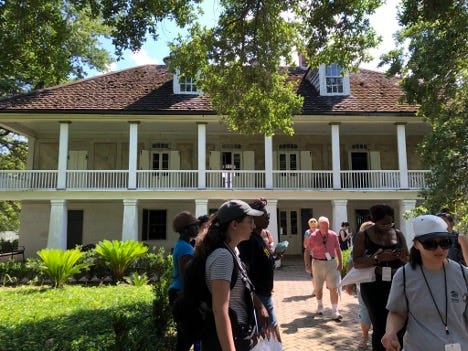
I shared a room with Vietnamese friends during my first two years, and at school I mostly stayed close to other international students. By my third year, I knew I had to change. I started with unpaid volunteer work, then internships, and slowly became involved in more social activities with Americans.
Along the way, my English improved, but more importantly, I became more confident, gained new skills, and felt much less anxious when communicating with Americans.
One of the most interesting things about that process was that I came to understand Americans differently. They were not cold in the way I had once imagined. In some situations they can be very direct and fair, but in many others they are open, generous, and warm — especially once they trust you.
Some American friends drove me to the grocery store every week, gave me rides to the airport when I flew home to Vietnam, bought me lunch, and one even offered to lend me money if I needed financial help to pursue an internship in another state.
Be Proactive at Work
If you are in a workplace, take the initiative to talk with coworkers. Unlike networking at school, office culture may feel more formal. It helps to prepare a few questions, stories, or ideas in advance — just enough to keep a conversation going a little longer.
For example, if someone has children, you might ask about parenting or how their kids are doing. If someone is more serious and less chatty, you can ask about a specific skill, a challenge they face, or something they enjoy about the job.
You can also spend time chatting with office assistants or administrative staff. They often know a great deal about the workplace and can even give you helpful context or conversation topics to use with others.
Set a Clear Goal When Attending Events
Instead of trying to connect with as many people as possible, you may get more value by focusing deeply on one or two conversations. It also helps to have a professional way to stay in touch — such as LinkedIn — and to follow up afterward if you want to maintain the connection.
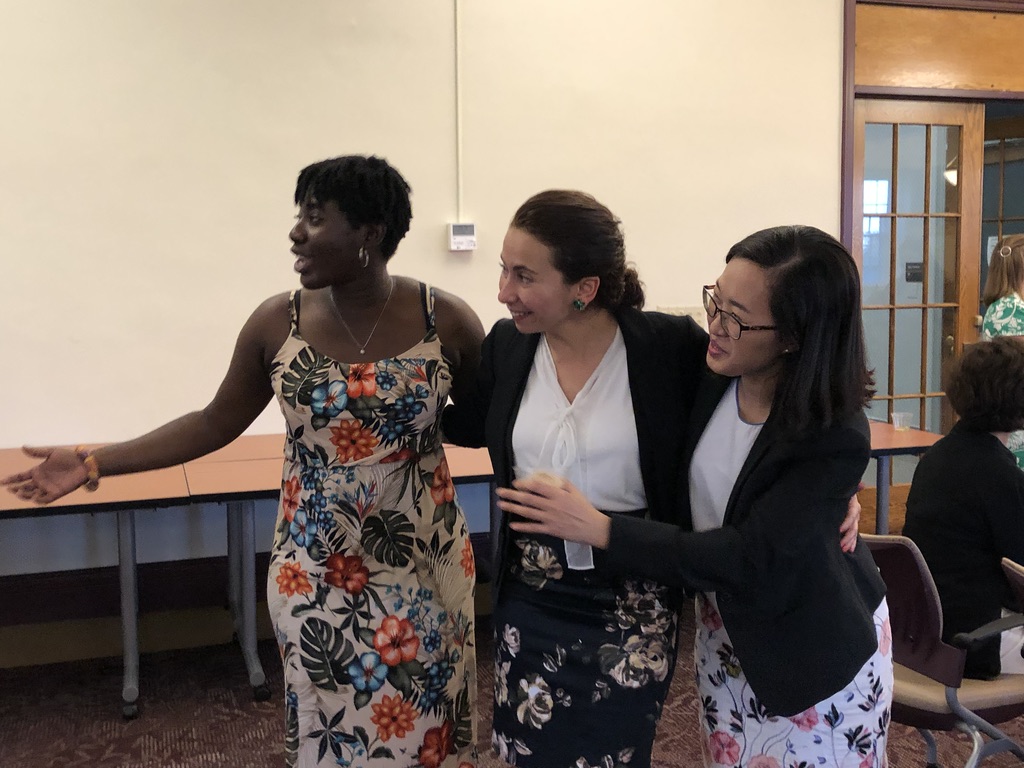
Use LinkedIn Well (It Really Matters)
LinkedIn is one of the most effective ways to build professional relationships. Sending a LinkedIn request — rather than asking for someone’s phone number or personal social media — is often the safest and most professional way to stay connected. You can also reach out to professors, managers, alumni from your school, or people in your field through LinkedIn and professional groups.
One thing worth remembering is that networking does not have to mean networking only with Americans. Americans may help you improve your English communication more quickly, but you can still learn a great deal about work and life from many kinds of people. A Chinese professor, an Indian manager, or a Korean coworker can all become meaningful professional connections if you take the time to build a real relationship.
Conclusion
If I could go back to my early years as an international student, I would probably spend more time building relationships instead of focusing almost entirely on grades and work. Many of the opportunities that came to me — academic, internship-related, and professional — did not come through applications alone, but through the people I met along the way.
Networking is not about trying to know as many people as possible. It is about learning how to connect sincerely with the people around you. And just like English or professional skills, it is something anyone can improve over time.